Two massive brand stories this week — one a 500-page SEC filing that doubles as marketing history, the other a research-backed argument that brand strategy is your last real moat in an AI-noisy world. Different contexts, same conclusion.
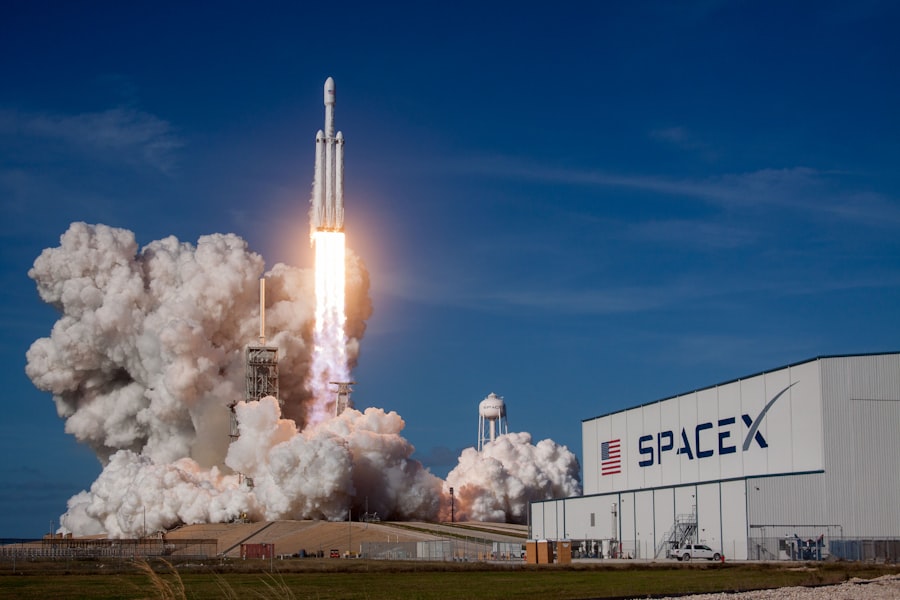
SpaceX's IPO Filing Is a 500-Page Brand Autopsy of What Killed Twitter
SpaceX filed its S-1 prospectus on May 20, and buried inside the rocket revenue tables is an extraordinary public accounting of what happened to the X brand after Elon Musk bought Twitter for $44 billion in 2022. The filing confirms X ad revenue plummeted by $595 million in 2024 — a full 11.5% drop — with the prospectus attributing the decline directly to "the loss of advertising partners." That's not spin. That's a legally sworn document admitting that advertisers walked.
The company says it's working to recover. X launched a new Ads Manager in April, expects to grow advertising revenue per user, and subscription revenue (bundling X and xAI's Grok) climbed $365 million in 2025 and another $177 million in Q1 2026. But the S-1 context is unavoidable: SpaceX sees $600 billion in digital advertising as part of its total addressable market — and it's betting the X brand can be rehabilitated as part of a $28.5 trillion empire. The prospectus also reveals SpaceX is pursuing a prospective $60 billion acquisition of AI coding platform Cursor.
For brand strategists, this is a real-time case study in brand equity destruction and the cost of audience trust collapse. The filing generated nearly $4.7 billion in revenue in Q1 2026, mostly from Starlink and rocket launches — but the advertising drag from X is documented evidence that you cannot rebrand your way out of a trust deficit.
The SpaceX S-1 is the best brand case study of 2026 — and it wasn't written by a professor. It was sworn to the SEC. Advertisers didn't leave X because of politics. They left because brand safety is a non-negotiable. Musk can build rockets to Mars. He can't rebuild advertiser trust on vibes alone. This filing is required reading for every client conversation about reputation and platform risk.
This is a textbook case of brand equity erosion — Keller's CBBE model in real time. The Twitter-to-X rebrand severed brand associations that took 15 years to build. Consumer-based brand equity is not transferable by executive decree. The $595M ad revenue drop is the quantified cost of misaligned brand architecture. Bring this to any M455 discussion on brand extension and stakeholder trust.

Brand Strategy Isn't Dead. It's Becoming the Only Moat That Matters.
A widely shared CMS Wire analysis is making the rounds this week with a clear thesis: as AI fatigue rises and markets get noisier, distinct brand positioning is more valuable, not less. The argument centers on B2B buyer behavior — buyers now spend approximately 83% of their purchase journey researching independently before ever speaking to a salesperson. By the time a prospect enters your funnel, their opinion is largely formed. If you haven't invested in brand, you may not have made the shortlist at all.
The piece also argues that brand distinctiveness is now a direct input into AI search visibility. Originality, authority, and recognizable perspective increasingly shape how large language models surface and recommend brands. Performance marketing can capture demand that already exists. Brand strategy creates the demand in the first place — and it trains the AI to know who you are.
Every client who tells me "we don't have budget for brand right now" is the same client who wonders why their lead gen isn't working. This is why. Brand isn't the soft stuff — it's the infrastructure. And now it's also your AI search strategy. If an LLM can't describe your brand clearly, neither can your prospects.
This is the long-run vs. short-run brand investment debate in classical marketing theory — Ehrenberg-Bass meets the AI era. The finding that 83% of B2B journeys happen pre-funnel validates decades of work on mental availability and salience. Pair this with Sharp's "How Brands Grow" for a compelling Exec Ed framing on why awareness investment is structural, not optional.
CMS Wire — Brand Strategy: The Only Moat That Matters (2026)
Two signals this week confirm what we've been saying all year: creator marketing has graduated from experiment to infrastructure. TikTok just made discovery smarter, and the data on always-on programs is no longer optional reading — it's budget justification.
TikTok One Launches Creator AI Search — Natural Language Discovery for Brand Partnerships
TikTok announced a significant upgrade to TikTok One, its consolidated creative platform for advertisers. The headline feature: Creator AI Search, an AI-powered natural language discovery tool that lets brands describe their ideal creator in plain language and returns up to 200 results. No more keyword guessing in creator databases. You describe the audience, the tone, the vibe — the AI finds the match.
The update also upgraded Partner Exchange (formerly TikTok Creative Exchange) with a revised brief structure, and expanded Content Suite globally in beta — a feature that surfaces brand-relevant organic creator videos, ranks them by predicted ad performance, and enables one-click Spark Ads authorization synced directly to TikTok Ads Manager. For brands running creator programs at scale, this is a meaningful workflow compression. IAB projects US creator ad spend will reach $43.9 billion in 2026 — this kind of tool infrastructure is what that number requires.
Natural language creator discovery is a massive unlock for smaller agencies and in-house teams that don't have a dedicated influencer tools budget. You used to need a Grin or an Aspire subscription to do this kind of matching. Now TikTok built it into the buying platform. The question is: are your briefs good enough to take advantage of it? Garbage in, garbage out — even with AI.
ppc.land — TikTok One: Creator AI Search and Partner Exchange updates (May 13, 2026)
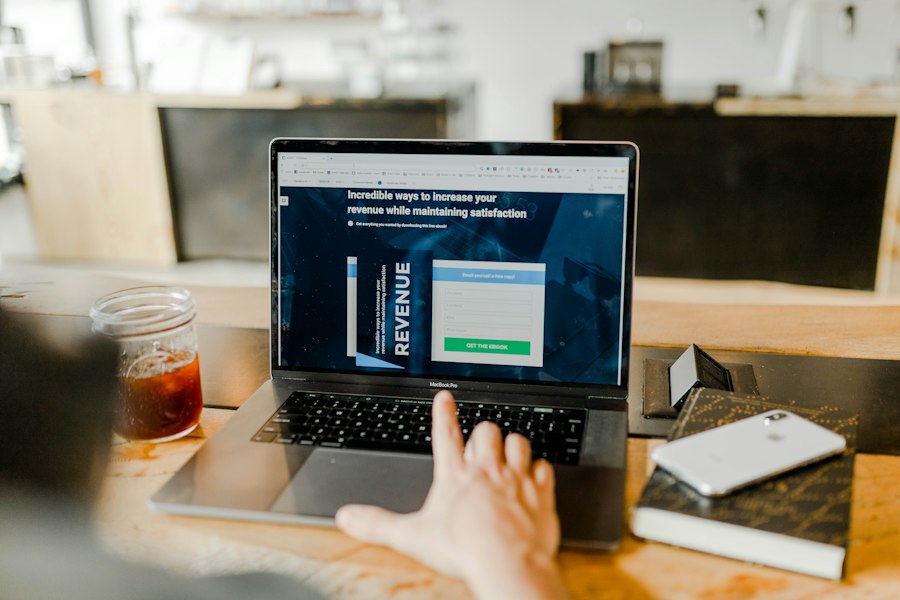
Always-On Creator Programs Are the New Media Buy — 74% of Brands Are Already Shifting Budget
Multiple reports converging this week confirm a structural shift in how brands think about creator partnerships. Always-on creator programs — ongoing, integrated relationships replacing one-off campaign bursts — are now the dominant model for brands that are getting results. New Engen's May trend report puts it plainly: creator marketing has become a core media channel, not a campaign tactic. IAB's 2025 digital ad market report now treats influencer spending with the same institutional rigor it applies to paid social and CTV.
The evidence is in the data. During Cyber Week 2025, influencer-driven spend jumped 51% year-over-year while commission costs stayed flat. eMarketer reports that micro- and nano-influencers will claim 45.5% of influencer marketing spending in 2026 — the shift toward smaller, more authentic voices with genuine community trust is accelerating. And 74% of brands are actively moving budget into creator programs this year, not testing — moving.
If you're still pitching clients on "a 3-month influencer test," you're behind the conversation. The brands winning right now built creator programs like they built email lists — long-term, relationship-first, compounding over time. The agencies that figured this out 18 months ago are booking the work. The ones still running one-off campaigns are losing pitches they don't even know they're in.
This is the transition from transactional to relational marketing in creator contexts — a core M455 theme. The shift from campaign to program mirrors the CLV-based frameworks we use in brand management. Micro-influencer dominance aligns with parasocial relationship theory: smaller audiences, deeper trust, higher purchase intent. The 51% Cyber Week spike is the kind of field data that validates the theoretical model in real business outcomes.
New Engen — Influencer Marketing Trends, May 2026
eMarketer — Creator Economy 2026
OpenAI just opened the most consequential new advertising channel in a decade to every SMB in America. And L'Oréal quietly showed the industry what AI-integrated creative production actually looks like at scale.

OpenAI Opens ChatGPT Ads Manager to All US Advertisers — No Minimum Spend, CPC Bidding Live
OpenAI launched its self-serve ChatGPT Ads Manager in beta on May 5, 2026 — one of the most significant platform expansions in digital advertising in years. The move dropped the previous $50,000 minimum spend that had locked out small businesses, and added cost-per-click bidding alongside the existing CPM model. Any US advertiser can now sign up directly at ads.openai.com and buy placements that appear in labeled boxes below relevant ChatGPT conversations — not within the AI responses themselves.
The platform already counts Best Buy, Lowe's, Target, Albertsons, and Williams-Sonoma among its early managed pilot brands. Agency ecosystem partnerships include WPP, Publicis Groupe, Dentsu, and Omnicom. Technology integrations are live with Adobe and Criteo. OpenAI is targeting $2.5 billion in ad revenue for 2026 and has stated a $100 billion goal by 2030. The recommended CPC starting bid is $3-$5; CPM runs at $60 — dramatically higher than Meta's typical sub-$20 CPM, signaling OpenAI is betting on intent-based premium pricing.
For marketers, the strategic implication is significant. ChatGPT ads match against conversational context, not keyword bids. Advertisers describe the territory where their products are relevant — the AI makes the final match. This is a fundamentally different skill set than traditional paid search. Brands with clear, specific positioning have an edge. Generalists don't.
This is the moment ChatGPT becomes a media channel, not just a productivity tool. Every brand that has done the work of clarifying their positioning — who they are, what they stand for, why they're different — is suddenly positioned to win on this platform. Every brand that has been vague? Invisible. This is the most direct argument for brand strategy investment I've seen this year. Nail the brand first. Then buy the ad.
This is a paradigm shift in advertising targeting — from demographic/behavioral matching to semantic-intent matching. The "describe your audience" mechanic is closer to positioning strategy than media buying. Students need to understand: this platform rewards brand clarity over budget size. The $60 CPM premium is the market's early signal that conversational AI inventory is perceived as high-quality intent. Worth watching for price compression as inventory scales.
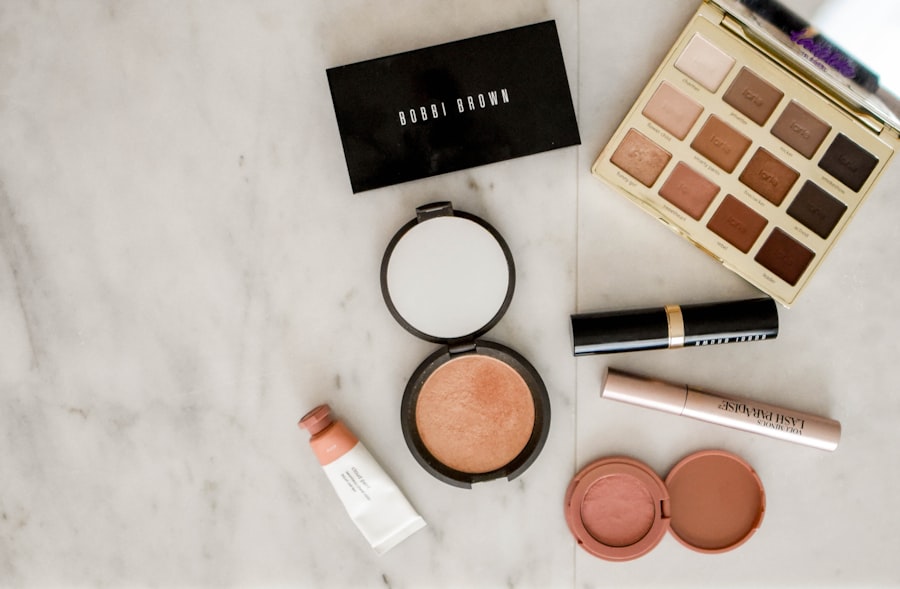
L'Oréal Embeds Generative AI Across Daily Marketing Workflows — And It's Changing What "Production" Means
L'Oréal has officially incorporated generative AI tools into its daily marketing workflows to manage surging demand for high-volume digital content. The beauty giant is using AI to adapt visual assets and video footage for various social platforms and regional markets, significantly reducing traditional production cycles. This isn't a pilot program. It's operational infrastructure — AI running inside the day-to-day creative machine of one of the world's largest consumer brands.
The implications for the marketing industry are significant. When a company with L'Oréal's scale embeds AI into production at this level, it signals a new baseline expectation. Clients will increasingly expect agency partners to operate with similar efficiency. The question isn't whether to adopt AI into your content workflow — it's whether your workflow is structured enough to absorb it without losing quality or brand consistency.
The L'Oréal story is the one I'm using with every client who says "we're not ready for AI content yet." L'Oréal didn't wait to be ready. They built the system and got ready in production. If you're an agency and you're not running AI-augmented creative workflows right now, your competitor is — and your client knows it. Speed and brand consistency together used to require a massive team. Now it requires a good system.
Crescendo AI — L'Oréal AI workflow integration (May 2026)
When the top analyst on AI memory stocks says he's never seen this kind of demand clarity, it's worth paying attention. Today's pick is the unsung infrastructure play of the AI era.
Micron Technology (NASDAQ: MU) — The Memory Behind Every AI Model
MU is trading around $762 today after a 640%+ run over the past 52 weeks (low: $90.93, high: $818.67). This is not a speculative AI play — Micron is the company building the physical memory infrastructure that every AI model runs on. High-Bandwidth Memory (HBM) is the critical component inside NVIDIA's AI chips, and Micron's entire 2026 HBM supply is sold out under binding contracts. That's not marketing language. That's revenue visibility most companies dream about.
Q2 FY2026 earnings delivered $23.86B in revenue — nearly triple year-over-year — blowing past the $20.07B estimate. Gross margins ran at 75%. The company has started volume production of HBM4 for NVIDIA's Vera Rubin platform. CEO Sanjay Mehrotra called it directly: "Compute architectures are becoming more memory-intensive. Micron is one of the biggest beneficiaries and enablers of AI." The Samsung labor strike in South Korea (set for 18 days) is a supply tailwind that could benefit Micron further.
Why it's relevant to marketers: Every AI tool you use — ChatGPT, Midjourney, Claude — runs on memory chips. The AI content revolution is only possible because of companies like Micron. Understanding the hardware layer helps you understand why AI capability curves keep accelerating — and why the tools keep getting better faster.
What's on my radar this week — beyond the news feed. Equal parts pop culture, real content, and the tools I keep coming back to.
🎤 Sunday Today with Willie Geist — Michael Bublé Interview
He's performing at the World Cup opening ceremonies in Toronto. If that's not an excuse to revisit every Michael Bublé album this weekend, I don't know what is. Catch the Willie Geist interview on NBC — it's warm, funny, and exactly the kind of content that reminds you why some artists are built for moments like this.
📱 Claude Cowork — YouTube Channel
Everything I'm learning about using AI as a real business tool — from running The Pulse to building workflows to the 30-day influencer experiment — it's all going on the channel. If you're curious about what it actually looks like to integrate AI into agency life, come watch. New content dropping regularly.