Two branding stories with very different energy this weekend. One is a case study in what proactive brand strategy looks like under pressure — PepsiCo using creators to launch a product before it hits retail. The other is a warning about what reactive strategy looks like — DTC brands cutting marketing budgets in response to tariff pressure, and why that's the wrong call.
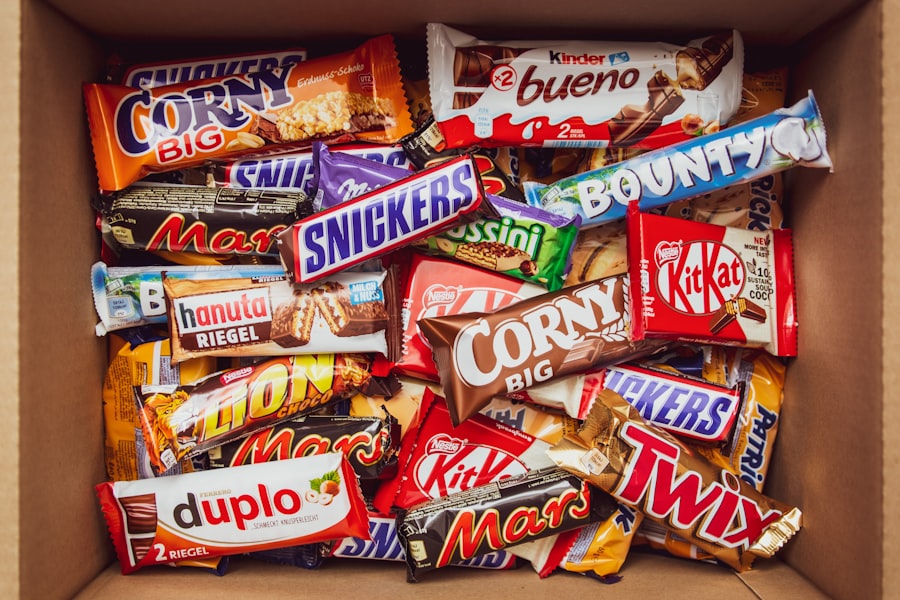
PepsiCo's Creator-First Product Launch Is a Case Study Every Brand Should Study Right Now
PepsiCo's Flavor Swaps launch earlier this year marked the first time the company debuted a product line through a social-first creator campaign — before national retail rollout. The structure: each product in the lineup was paired with a different creator. Madison Beer got Lay's Sweet Southern Heat Barbecue on Cheetos Crunchy. iShowSpeed got Ruffles Cheddar & Sour Cream on Doritos. Dude Perfect got Doritos Cool Ranch on Ruffles. Products dropped first on TikTok Shop. Nationwide retail followed in March.
That sequence matters. Launching through TikTok Shop before retail shelves means the brand tests real consumer demand signals before committing to nationwide distribution investment. It also means the creator partnership isn't a promotional add-on — it's the product's origin story. When iShowSpeed promotes his Ruffles collab, he's not just an endorser. He's a co-author. That authenticity gap between those two things is enormous in the creator economy right now.
The Doritos Protein launch follows a similar playbook but extends it further — functional product innovation (10g protein per serving, no artificial colors) layered on top of one of the most recognizable snack brands in the world. PepsiCo CEO Ramon Laguarta has said publicly that Doritos Protein and other functional launches are about two specific consumer behaviors: bringing lapsed brand users back and attracting new ones who want functional ingredients without compromising on flavor. That's a dual audience strategy built around product differentiation, not just marketing spend.
The smartest thing PepsiCo did here wasn't the creator partnership — it was the sequencing. Social-first before retail is a proof-of-concept structure that lets the creator audience validate real demand before the brand overcommits to distribution. Most brands still do this backwards: they launch into retail, then use creators to drive traffic to a product that's already been produced at scale. Launching on TikTok Shop first inverts that risk. More brands should borrow this playbook — especially DTC brands dealing with tariff pressure on margin.
This is product co-creation strategy executed at CPG scale. By pairing specific creators with specific products, PepsiCo is using the creator's audience as a product development signal, not just a distribution channel. The brand isn't asking "which creator has the most followers?" — it's asking "whose audience already wants this flavor profile?" That's a fundamentally different brief. For M455 students: note how creator strategy in 2026 is inseparable from product strategy, pricing strategy, and launch sequencing. It's not a marketing add-on anymore.

Tariffs Just Hit DTC Brands 15–45%. The Wrong Response Is to Cut Marketing.
The April 2026 tariff adjustments have landed on DTC brands with average cost increases of 28%, with electronics and apparel categories taking the hardest hit at 15–45%. The initial response from most brands is predictable: panic, margin protection, and marketing budget cuts. That's also exactly the wrong strategic move — and the data backs it up.
When costs spike suddenly, brands that pull back on marketing create a vacuum that better-capitalized competitors immediately fill. The DTC brands that survive tariff cycles are the ones that accelerate strategic repositioning during the downturn — moving upmarket, doubling down on value messaging, and using the crisis to eliminate price-sensitive customers in favor of value-conscious buyers who have higher lifetime value. According to ATTN Agency's analysis, 73% of DTC brands are currently cutting marketing spend and hoping tariffs reverse. That means 27% are about to gain disproportionate market share.
The specific tactical playbook: shift creative to lead on quality and durability rather than price; build comparison content against lower-quality alternatives; separate campaigns for existing loyal customers (retention) vs. new acquisition; move influencer budgets toward longer-term hybrid partnerships rather than one-off posts. The brands that execute these pivots in Q2 will emerge from the tariff cycle with stronger brand equity and a higher-value customer base than they entered with.
Tariff cycles are brand-building opportunities in disguise. When 73% of your competitive set is going dark, every dollar you keep in market gets more efficient because there's less noise. The brands that will look back on April 2026 as a turning point are the ones using this moment to sharpen their premium positioning, not the ones waiting for tariffs to reverse. Use this moment to elevate. Don't go silent.
📚 Sources — Verified
ATTN Agency: Tariff Impact on DTC Brands April 2026
The creator economy's Sunday read: how the biggest brands are embedding creators into the product development process — not just the marketing funnel — and what that means for how agencies need to evolve their creator strategy briefs.
The Creator Middle Class Is Real Now — And It Changes How You Should Cast Your Next Campaign
The Influencer Marketing Factory's 2026 Creator Economy Report surveyed 1,000 U.S.-based creators and found something the industry has been circling for years: a genuine middle class has emerged. Nearly half of creators (48.7%) still earn under $10,000 a year. But 45.6% now earn between $10,000 and $100,000 — and more than half (51.5%) reported year-over-year earnings growth in 2025. Only 5.7% clear six figures. The median creator is no longer a side hustle story. They're a small media business.
What makes this matter for brand strategy: 44.9% of creators now say they value stability, consistency, and deeper brand alignment over one-off campaigns. That preference signal is a direct invitation for brands to replace transactional partnerships with structured, longer-term creator programs. The brands that respond to it will get better creative, more authentic content, and more committed partners. The ones that keep treating creators as interchangeable campaign assets are going to keep paying flat fees for declining engagement.
The IAB data layered on top of this: the sharpest growth in creator spend is coming from paid amplification of creator content beyond social media — projected to jump 56% to $11.1 billion. Brands are pulling creator content into display, CTV, and retail media environments. That amplification shift requires a different creator relationship than the traditional one-off collab. It requires creators who actually understand the brand well enough to produce content that travels across channels.
The creator middle class is the sweet spot most brands are still undershooting. Micro-creators with 10K–100K followers and $30K–$80K annual creator income are the most engaged, most reliable, and most open to structured brand partnerships. They want stability. Give it to them. A 6-month retained creator is worth more to your brand than six one-off posts from six different people. The data is now very clear on this — and so are the creators themselves.
Sunday context: the Google-Anthropic $40 billion deal confirmed Friday sets the infrastructure stakes for the rest of 2026. Here's the strategic read for marketing teams planning their AI tool stack for Q3 and Q4.
After a $40B Google Bet and a $40B Week in AI, Here's How to Think About Your AI Tool Stack for the Rest of 2026
Google's $40 billion Anthropic commitment, finalized Friday, is the latest signal that the AI infrastructure layer is being locked in by the hyperscalers for a decade. Amazon ($25B into Anthropic), Microsoft (OpenAI partnership + Copilot), and now Google ($40B Anthropic) have all made their bet. The AI tools marketers will be using in 2026 and 2027 are powered by models and infrastructure that were essentially pre-sold this week.
For marketing teams, the practical question isn't "which AI company is winning" — it's "which layer of AI infrastructure will my tools run on, and what does that mean for my data, my governance, and my vendor lock-in risk?" Adobe CX Enterprise runs on MCP and integrates with Claude, ChatGPT, and Gemini. HubSpot's AEO platform is model-agnostic. The brands building AI workflows on closed, single-model platforms are taking a different risk than the ones building on interoperable architecture. Right now, interoperable wins.
The second strategic question: where is AI changing the work itself vs. just speeding it up? GPT-5.5's autonomous task execution is meaningful because it begins to shift AI from assistant to agent — planning steps, catching mistakes, executing document-heavy research with minimal prompting. When AI agents can self-direct on structured tasks, the "AI as a faster junior copywriter" frame starts to break down. The frame that replaces it: AI as a workflow layer that operates between systems, with humans setting direction and approving outputs. That's the Human in the Loop model — and it's the only sustainable one.
The AI infrastructure bets are made. What's not decided yet is which brands will build workflows that actually give them a durable competitive advantage vs. which brands will license the same tools as everyone else and wonder why it's not differentiating. The differentiation isn't going to come from the model — it's going to come from the data you feed it, the workflows you build around it, and the humans you keep in the loop. That last part is non-negotiable. The brands that automate the human out of the loop are the ones that will create the brand safety incidents that define 2026's case studies.
📚 Sources — Verified
CNBC: Google $40B Anthropic Investment
MarTech: Adobe CX Enterprise MCP Architecture
Not Nvidia, not Meta. This week: the company that just had its best stock performance since 2005, driven by an insight buried in Intel's earnings that Wall Street hadn't fully priced in.
Advanced Micro Devices, Inc. (AMD)
AMD surged 13.85% on April 24 — its best single-day performance since 2005 — and it wasn't even AMD news that drove it. Intel posted Q1 2026 revenue of $13.6 billion, $1.4 billion above its own guidance midpoint, driven by an explosion in server CPU demand. D.A. Davidson analyst Gil Luria immediately upgraded AMD to Buy with a $375 target, citing a structural insight: AI workloads are evolving from pretraining (which drove massive GPU demand) toward inference and agentic AI, which require a fundamentally different compute mix. The GPU-to-CPU ratio is shifting from roughly 8:1 for pretraining toward near parity for agentic workloads. That is an enormous tailwind for AMD's EPYC server CPU business.
AMD's own setup is strong going into May 5 earnings. The company posted record 2025 revenue of $34.6 billion (+34% YoY). Data center revenue specifically hit $5.38 billion in Q4 2025, up 39% YoY. CEO Lisa Su's partnerships with Meta and OpenAI — including performance-based warrants — signal that AMD is now inside the hyperscaler AI supply chain in a way it wasn't 18 months ago. With Stifel at $320, BofA at $310, and DA Davidson at $375, the analyst community is moving aggressively higher ahead of a print that could reprice the stock either direction.
AMD winning on Intel's earnings is the market figuring out that the CPU is back as a critical AI workload component. Every agentic workflow — every AI agent that plans steps, routes tasks, and manages memory — needs CPU alongside GPU. AMD has both. This isn't a GPU story anymore. It's a full-stack AI compute story, and AMD is building the infrastructure for the agentic era we're entering. Earnings May 5 is the near-term catalyst. Watch guidance on MI450 timing and hyperscaler customer deployments.
Sunday edition. What's worth your time this week as the news cycle reloads.
🏥 The Pitt
If you haven't started: this is the weekend. The real-time ER format is doing something no other show is attempting. It will rewire how you think about tension in storytelling — which isn't a bad skill for marketers either.
📊 Meta Earnings — Wednesday April 29
Watch the transcript, not just the headlines. Zuckerberg will talk about Andromeda and AI ad creative performance in terms that directly inform how you should be building Meta campaigns right now. This is a masterclass every couple of months if you pay attention to the right parts.
📱 YouTube — Claude Cowork
The experiment in public. Building real marketing intelligence with a human in the loop — documented as it happens. Follow along for behind-the-scenes on what actually works and what doesn't.