Two brand stories dominating the week — one is a fast-food chain using franchise IP to execute a full brand turnaround, the other is a cautionary tale about the gap between cultural buzz and brand fundamentals. Both are worth studying.
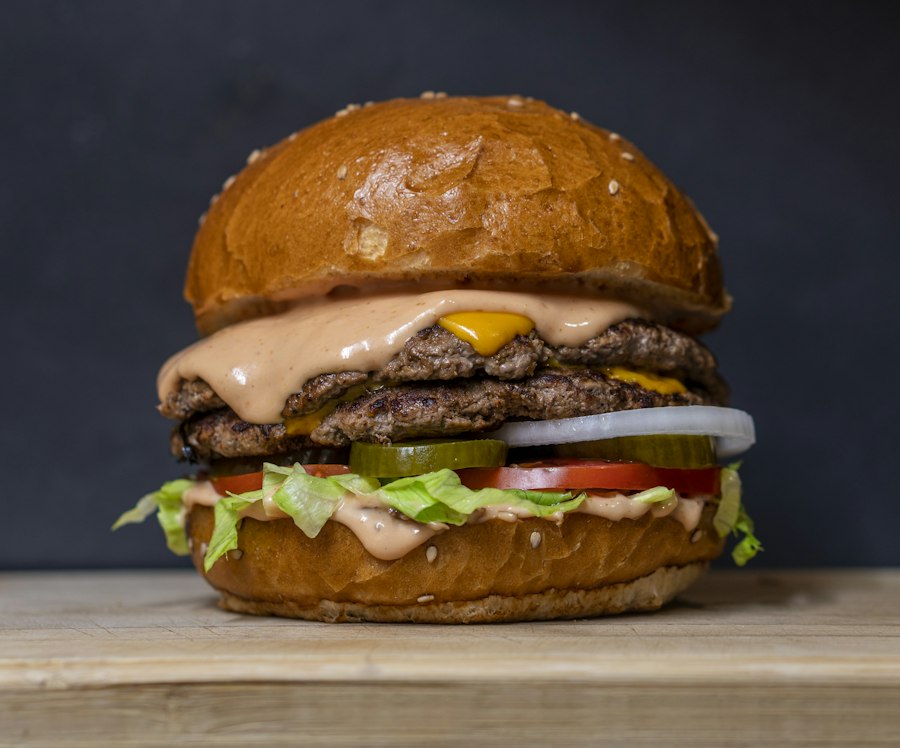
Burger King Fired Its Mascot. Now It's Going Full Star Wars — and It's Working.
Burger King just announced one of the most layered fast-food brand collaborations in recent memory. Tied to the May 22 theatrical release of Star Wars: The Mandalorian and Grogu, the campaign rolls out across 70+ global markets starting May 4 — Star Wars Day — with a full limited-time menu (BBQ Bounty Whopper, Grogu's Blue Cookie Shake, Garlic Chicken Fries), collectible cups, immersive in-store takeovers, influencer activations, and kids' meals with character toys launching April 28.
What makes this more than a typical IP collab: it's part of a deliberate brand turnaround. In March 2026, Burger King literally fired its King mascot — a character that had anchored the brand for two decades — after data showed it was damaging the kids and family business. The Mandalorian campaign is the next move in that repositioning: less menacing mascot, more franchise magic. CMO Joel Yashinsky framed it explicitly as both a brand play and a recruiting signal — telling potential hires that this is "the level of investment and innovation we're bringing to our restaurants every day."
The execution is also notably phased and multi-surface. Kids' meals land first (April 28) to capture a different audience segment. The main menu hits May 4 to ride the cultural moment of Star Wars Day. Then the film releases May 22. Each wave extends brand presence without blowing everything in one drop. Compare this to brands that dump a collab all at once and burn out in 48 hours — Burger King is playing the long game here.
Burger King firing its own mascot and then immediately landing a Star Wars deal is a brand strategy case study in real time. They diagnosed the problem (mascot was hurting them with families), made the hard call, and replaced it with something with built-in fan equity. The phased rollout is smart — they're not trying to milk one news cycle, they're building sustained attention over four weeks heading into a major theatrical release. This is what it looks like when a brand actually executes a repositioning instead of just announcing one.
Classic co-branding theory: borrowed brand equity accelerates repositioning faster than organic brand-building. Burger King is using Star Wars' established trust with families to shortcut a credibility gap it couldn't close on its own. For M455 students: note how the brand partnership serves a dual audience — consumers and potential employees. Yashinsky said it outright. That's sophisticated brand management — using a single campaign to solve two different communication problems simultaneously.
📚 Sources — Verified
Marketing Dive: Burger King Star Wars Campaign Analysis
Burger King Official Press Release
Photo: Unsplash

Gap Is on a Cultural Hot Streak — But BoF Says the Fundamentals Are Lagging Behind
Gap has had one of the more remarkable brand rehabilitation runs in recent memory. Its "Better in Denim" campaign with K-Pop group Katseye drove 8 billion media impressions — one of the brand's most successful campaigns ever. A spring campaign starring Parker Posey timed perfectly with her White Lotus moment. Collaborations with Sandy Liang, Cult Gaia, Beis, and MadHappy kept Gap at the center of cultural conversation for twelve consecutive months.
But Business of Fashion's latest BoF Insights analysis draws a critical line: Gap is leading on culture and trailing on fundamentals. The brand generates buzz and impressions, but the underlying brand equity — built through consistent product quality, in-store experience, and pricing discipline — hasn't kept pace. It's a pattern marketers across categories should recognize: cultural moments can be borrowed, but brand fundamentals must be owned. Borrowed authority eventually expires.
The Gap story is also a live study in how collaboration strategy can move brand perception faster than traditional repositioning. By pairing with Victoria Beckham for premiumization and choosing talent at the precise peak of their cultural moment, Gap compresses years of brand work into single campaigns. The question BoF is raising: what happens when the collaborations stop generating buzz? Is there enough structural equity underneath to hold the gains?
This is the tension every marketing team lives in — cultural moments vs. structural equity. Gap is proving you can manufacture buzz at scale. But BoF is right to flag it. The Katseye campaign was exceptional. The Parker Posey timing was genius. But campaigns don't compound the way a strong brand does. The brands that last use cultural wins to invest in the product, the store, the pricing — everything below the marketing line. That's what converts a hot streak into a durable brand.
📚 Sources — Verified
Business of Fashion: Gap Brand Strategy Analysis
The creator economy just repriced itself, and brands on flat-fee deals need to adjust fast. Instagram is back in affiliate commerce. Target ended standard creator commissions. And performance-based deals have crossed the majority threshold for the first time. The IAB has confirmed it: creator marketing is now a core media channel.
The Flat-Fee Creator Deal Is Over. Here's What's Replacing It.
The creator economy is undergoing a fundamental pricing shift. The IAB's latest internet ad economy report confirms creator ad spend hit $37 billion in 2025 and is on pace to reach $44 billion this year. Social commands the largest digital ad share at 40% — and Meta is expected to surpass Google in both U.S. and global ad revenue for the first time ever. These are no longer projections. They are operating realities.
Three structural signals arrived almost simultaneously in April: Target quietly ended its standard creator commission structure. Instagram formally re-entered affiliate commerce, allowing creators to tag products directly in Reels and earn commissions on resulting sales. And the Influencer Marketing Factory's 2026 Creator Economy Report confirmed that performance-based compensation now represents 53% adoption — more than double two years ago. Hybrid base-plus-commission structures are now considered table stakes for any serious creator deal in 2026.
The IAB's framing is direct: creators are "embedded in the foundations of media strategies, operational workflows and even product development." For mid-size brands, this shift is disproportionately consequential. They lack the leverage enterprise brands use to hold flat-fee terms, and their attribution infrastructure is typically weaker. Brands that don't adapt their contract structures now will be overpaying for reach they can no longer accurately measure.
If your agency or brand is still quoting flat fees on influencer campaigns, you're pricing off a model the market is actively abandoning. Instagram's move back into affiliate commerce is the unlock brands needed — it removes the attribution friction that kept performance deals complicated. Audit your creator contracts now. Hybrid structures protect your spend and give creators real upside. That alignment is exactly what makes performance-based deals outperform flat fees long-term.
This is a textbook principal-agent problem resolving itself. Flat fees create misaligned incentives — the creator gets paid regardless of performance. Performance-based models align payout with actual brand outcome. What's fascinating: platforms (Instagram), brands (Target), and data providers (CreatorIQ, IAB) all moved in the same direction within weeks. That simultaneous convergence is how structural industry shifts actually happen — not through a single announcement but through cascading signals.
Adobe didn't just release new features this week — it redrew the entire map for enterprise marketing technology. CX Enterprise is a complete rebrand and rearchitecture of Adobe Experience Cloud, built entirely around AI agents. If you run marketing operations at any scale, this is the most consequential platform announcement of the year.

Adobe Killed Experience Cloud. CX Enterprise and Agentic AI Is What Comes Next.
At Adobe Summit 2026 in Las Vegas, Adobe announced it is replacing Experience Cloud with Adobe CX Enterprise — a completely rebuilt, AI-first platform organized around persistent AI agents called "Coworkers." The platform is structured around three pillars: Brand Visibility, Customer Engagement, and Content Supply Chain. The Coworker agents don't just assist — they receive a business goal (like "increase cross-sell by 3%"), assemble the required audience segments, pull creative assets, draft a customer journey, and route approvals. This is Adobe's biggest strategic bet in a decade.
The scope is notable. More than 10 purpose-built AI agents previewed at Summit 2025 are now in full production. Over 1,770 enterprise customers are already entitled to use them. The platform is interoperable — supporting Model Context Protocol (MCP) and offering reference architectures for Microsoft Copilot, ChatGPT Enterprise, Claude Enterprise, and Gemini Enterprise. Leading global agencies including Publicis, Omnicom, Havas, and WPP are standardizing on CX Enterprise. This is infrastructure-level, not feature-level.
But Adobe's own research underlines the tension: 75% of organizations cite data integration and quality as their top AI implementation challenge, 71% cite talent gaps, and 68% cite unclear ROI. CX Enterprise is a compelling vision — the brands that will realize value fastest are the ones that already have clean data, structured content, and AI governance in place. The ones without that foundation are buying a more sophisticated tool for infrastructure they haven't built yet.
Adobe isn't pitching a suite of tools you operate anymore — they're pitching an agent layer that operates the suite, with humans providing constraints and approvals. That changes job descriptions, agency relationships, and budget allocation entirely. The Human-in-the-Loop governance model Adobe is building into CX Enterprise isn't just a product feature — it's the operating model you need to be building inside your own organization first, before any software can help you.
Adobe's shift from "managing experiences" to "orchestrating experiences" maps directly to service-dominant logic in marketing theory: value is co-created, not delivered. The semantics matter. For Exec Ed AI Applications in Marketing students, Adobe CX Enterprise is the live practitioner case study on how agentic AI changes the marketer's role — from tool operator to goal-setter and overseer. That's a fundamentally different job description.
One company in the AI infrastructure stack worth watching this week — not the Mag 7, not the obvious play. The picks and shovels of the AI build-out. This week: the observability layer.
Datadog, Inc. (DDOG)
Datadog is the "intelligence layer" of the AI infrastructure stack — and it just had a strong week on multiple fronts. On April 22, DDOG launched GPU Monitoring (now generally available worldwide), a product that gives AI teams visibility into GPU fleet health, cost, and utilization. The timing is perfect: as enterprises scale AI workloads, GPU instances now represent 14% of compute costs — and teams are flying blind on whether those GPUs are actually earning their keep. DDOG plugs that gap.
Simultaneously, three analyst calls landed this week reinforcing the bull case: Citi opened an "upside 90-day catalyst watch," Rothschild initiated with a Buy, and TipRanks flagged DDOG and AGYS as top tech picks. Q1 2026 earnings report May 7 — the catalyst that could reprice the stock either direction. With AI driving an explosion in cloud application complexity, and 69% of enterprises now using three or more AI models in production, Datadog's observability platform becomes more essential with every additional model deployed.
Datadog is the infrastructure story most marketers overlook because it lives a layer below the tools we touch. But here's the thing — every AI platform, every martech stack, every cloud-based campaign management system runs on infrastructure that needs to be monitored. As brands pile AI agents into their workflows, the operational complexity doesn't disappear. Someone has to watch the systems. That's DDOG's job, and that job is only getting bigger.
The media, cultural moments, and experiments worth your time right now.
🏥 The Pitt
Still the most intense thing on television. The real-time ER format is doing something technically and emotionally that no other show is attempting. If you haven't started, clear a weekend. It will gut you in the best way.
🎬 Mandalorian & Grogu — May 22
Pedro Pascal, Jon Favreau, and the return of the best franchise arc in recent Star Wars history. Worth tracking as a marketing case study for how Disney and Burger King are co-building the cultural runway to opening weekend. The campaign architecture is genuinely impressive.
📱 YouTube — Claude Cowork
Everything about building with AI in real time. Follow the Claude Cowork channel for a behind-the-scenes look at what's actually possible when a human stays in the loop and leads the AI. This is the experiment in progress — and it's getting interesting.