Gaming closes out IAB's Global Creator Week today with one number every media planner should sit with: a massive gap between where attention lives and where ad budgets actually go.
Gaming Gets 67% of Weekly Attention and 2.4% of Ad Budgets
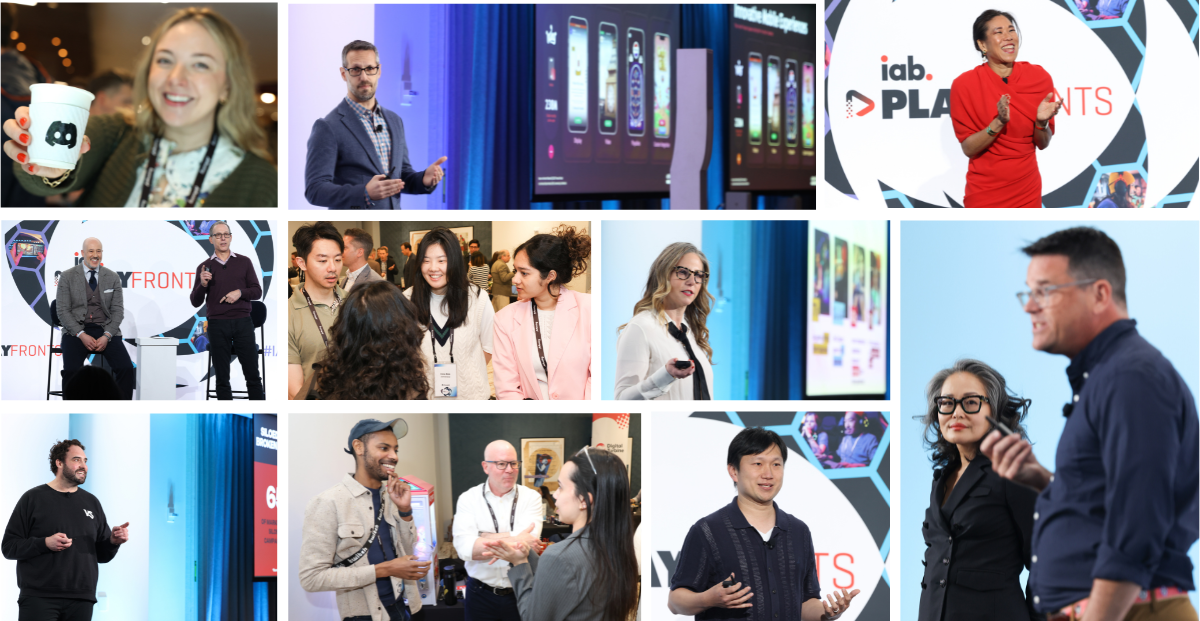
IAB PlayFronts 2026 takes place today at Convene 360 Madison Avenue in New York, closing out the inaugural IAB Global Creator Week alongside CreatorFronts and the Podcast Upfront earlier in the week. The invite-only event, already at capacity, brings together gaming platforms, publishers, and brand marketers from Roblox, Zynga, Google, Microsoft Advertising, and WPP Media to make the case for gaming as a mainstream media channel rather than a niche buy.
The number driving the day's agenda comes from Overwolf's opening session: only 2.4% of media spend reaches gaming despite 67% of Americans playing every week, a gap Overwolf CMO Shahar Sorek and VP Nathan Lindberg are presenting new research on. For advertisers still treating gaming as "we already reach gamers on Meta," the session argues that logic doesn't hold up against the numbers.
A 2.4 percent versus 67 percent gap is the kind of stat that should reshape a media plan, not just a conference slide. If gaming is truly where the attention is and the budget hasn't followed, that's not a niche opportunity, it's a mispriced one, and the agencies who move first get first pick of the good inventory.
Emplifi just put hard numbers behind something every good creator partner already knew: the post works better when the creator, not the brand, hits publish.
Emplifi Just Proved the Best Brand Post Isn't Posted by the Brand
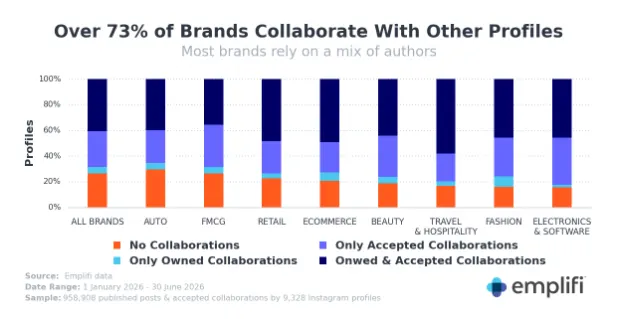
Emplifi reviewed more than 520,000 posts from 3,791 brand profiles on Instagram and found that creator-published collaborations consistently outperform both standard brand posts and brand-published collaborations. More than 73% of brands on Instagram now use the platform's collaboration feature, but the type of collab matters: "accepted collaborations," where a creator publishes the post and invites the brand in, deliver more than 5x the amplification of non-collab posts in ecommerce and retail.
Reels saw the strongest gains from collaboration across every content type tested, which tracks with creators generally having a sharper read on short-form video trends than in-house brand teams. Emplifi's data pool covers posts from January through June, overlapping with Meta's expanded creator affiliate program, which may be pulling more creators toward brand-initiated posts for commission.
The gap between "brand invites creator" and "creator invites brand" is bigger than it sounds, it's the difference between a post that reads as an ad and one that reads as a recommendation. If a client's collab posts are underperforming, the fix might be as simple as flipping who hits publish first.
As AI automates more of programmatic buying, the industry just got its first shared rulebook for how that automated buying and selling should actually work.
The Industry Just Got Its First Shared Rulebook for AI-Driven Programmatic
IAB Tech Lab released Programmatic Standard Practices v1 for public comment this week, the first deliverable from its Programmatic Governance Council, a group including Omnicom, WPP, Dentsu, Disney, Amazon Ads, Magnite, and The Trade Desk. The document establishes shared business rules and norms for how buyers and sellers should conduct programmatic transactions, aiming to reduce unnecessary transaction costs and improve transparency across an ecosystem that's gotten harder to audit as AI and automation take on more of the decision-making.
Omnicom EVP Ben Hovaness framed the public comment period, open through October 16, as a chance for the industry to pressure-test the guidance against how programmatic transactions actually work in practice, rather than how they're supposed to work on paper.
As AI takes over more of the bidding and buying decisions, having a shared rulebook for what "fair" looks like matters more, not less. Worth having someone on the media team actually read this once it's finalized, since the fine print here is exactly the kind of thing that ends up mattering during a contract dispute.
A federal judge just handed independent ad-tech a real win, and the market reacted within hours.
Magnite (MGNI): Up 5% as a Federal Judge Rewrites the Ad-Tech Rulebook
Magnite shares jumped 5% to around $25.50 this morning after Judge Leonie Brinkema released the full remedies opinion in Google's ad-tech antitrust case, requiring interoperability with the open-source Prebid header-bidding tool and banning Google from tying its ad server to its own exchange. PubMatic climbed 6% to $17.79 on the same thesis, while The Trade Desk, which sits on the demand side rather than the sell side, barely moved, down 0.5% to $14.42, and Alphabet itself ticked up just 0.8%, suggesting the market reads this as a targeted supply-side remedy rather than an industry-wide reset.
Analysts moved fast: StoneX raised its Magnite price target to $43 from $33, and Craig-Hallum lifted its target to $32 from $28, both citing the ruling's 60-day compliance window and six years of ongoing technical monitoring as reasons independent sell-side platforms are positioned to gain real ground on Google's ad exchange.
The market's real signal here isn't Magnite's 5 percent pop, it's Google's muted 0.8 percent reaction. When the company facing the ruling barely flinches while its smaller rivals jump, that tells you the remedy opens a door without knocking down the house. Worth watching whether Magnite and PubMatic can actually convert that door into market share over the next two months.
⚠️ Not investment advice. Verify independently before any decision.
Refreshed weekly, out with the stale, in with what's actually on Kelly's radar right now.
Ted Lasso, Season 4
Weekly episodes on Apple TV, running through October 7. Still earning the return.
Apple TV"The Art of the Brand" Podcast
Camille Moore and Phillip Millar's brand-strategy conversations remain a standing listen.
PodcastBrands & AI on CNBC
Standing watch item for how Wall Street covers the intersection of brand marketing and AI platforms.
CNBCCoach Cignetti & the Hoosiers
No. 5 IU is 2-0 after a 55-0 rout of Howard. Josh Hoover is the national leader in passing efficiency.
Multiple Outlets