A $12.99 doll got a full storefront takeover. Proof that stunt marketing still earns free press when the execution is specific enough to photograph.
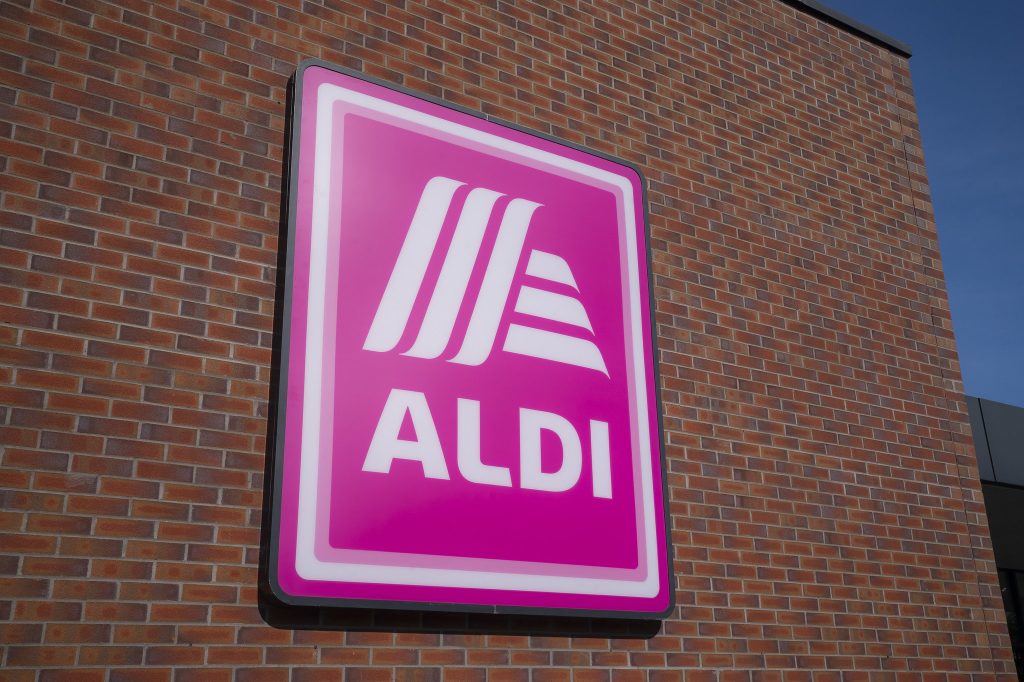
Aldi Turned a London Store Barbie Pink. Retail PR Keeps Getting More Literal.
Aldi repainted its Barnet store's familiar blue, red and orange logo Barbie pink from September 1 through 10 to launch the £12.99 Barbie Aldimania Dreamland Doll, which hit shelves September 6 as part of the chain's September Toy Event. The doll wears a pink Aldi logo dress with matching visor, sunglasses and shoes, plus a haul of Aldi-themed accessories: a mini shopping trolley, foodie favorites, a flask and table tennis rackets.
It is the latest entry in Aldi's Aldimania merch line, which started in 2021 and last year turned cult Middle Aisle products into temporary tattoos. Chief commercial officer Julie Ashfield called it "a Barbie pink takeover" designed to give collectors and fans a photo moment ahead of launch day.
This costs Aldi almost nothing beyond a can of paint and a week of signage, and it earned coverage across half a dozen UK retail and marketing trades before the doll even hit shelves. The lesson for every client with a tight activation budget: a single photographable stunt tied to a real product launch outperforms a full campaign built on abstraction. Specificity is the whole strategy here.
Unilever went from 10,000 creators to 300,000 in two years. Agencies are still arguing about what that number actually means.

Unilever's Creator Network Hit 300,000. The Real Story Is Everything Underneath That Number.
Unilever's creator roster grew from 10,000 to roughly 300,000 in two years, and the company activated 50,000 of them at this year's FIFA World Cup for a combined reach north of 600 million people. CEO Fernando Fernández has credited creators directly for the company's growth on recent earnings calls, and roughly half of Unilever's marketing budget now flows into social-first, creator-led content.
Agency executives who spoke with Digiday remain skeptical that any brand can meaningfully manage that many relationships at once, and Unilever itself admits it cannot bring all 300,000 creators into a single meeting. What is not in dispute is the results: "Vaseline Verified," a series built on lab-tested, creator-developed hacks, drove a 43 percent sales uplift, and a Dove x Crumbl collaboration pulled 3.2 billion impressions with over half its buyers new to the Dove brand.
Every consumer brand watching this is not copying Unilever's headcount, they are copying the permission structure it created. When a company this size says half its budget goes to creators, every CMO with a smaller budget gets an easier internal conversation. Watch for this to accelerate creator spend at brands nowhere near Unilever's scale.
ChatGPT Ads went from pilot to a billion-dollar run rate in under 200 days, and self-serve buying just opened across three new regions. Standing item for anyone weighing a test campaign.
ChatGPT Ads Just Crossed a Billion-Dollar Run Rate. Self-Serve Opened in India, Europe and MENA the Same Week.
OpenAI announced on August 31 that ChatGPT Ads reached a $1 billion annualized revenue run rate in under 200 days, roughly $83 million a month. Self-service access through Ads Manager opened the same day across India, 31 European markets, and the Middle East and North Africa, meaning any business in those regions can now set up and run campaigns directly rather than going through OpenAI's sales team or an agency partner.
The platform is used by tens of thousands of advertisers across more than 40 countries, and small and midsize businesses now make up a material share of spend. Analysts note the run rate still trails OpenAI's own $2.5 billion 2026 ad revenue target, and the company has yet to publish click-through, conversion or cost-per-acquisition benchmarks alongside the milestone.
A billion in run rate with zero published performance benchmarks is a headline built for advertisers, not proof it works. Worth watching before committing real budget, but the self-serve expansion means a small test campaign is now a low lift to set up. This stays on our standing watch list.
While ChatGPT Ads celebrates a billion-dollar milestone, one legacy adtech name just got demoted out of the S&P 500 entirely.
The Trade Desk (TTD): Down 63% Year to Date and Out of the S&P 500
The Trade Desk closed at $14.02 on September 8, down 63 percent year to date, as its forced exit from the S&P 500 into the S&P SmallCap 600 collided with a previously announced 15 percent workforce reduction. The company disclosed the restructuring on September 3, expecting $39 to $51 million in cash charges, primarily severance, as it works to redirect resources toward higher-priority growth areas.
The stock has fallen roughly 90 percent from its late-2024 peak near $141, and the index reshuffle means less automatic demand from passive index trackers going forward, likely adding volatility. Some analysts view the workforce cuts as a credible signal that new leadership discipline could eventually restore margins, even as the near-term picture stays rough.
This is the flip side of today's ChatGPT Ads headline. One adtech platform is celebrating a billion-dollar run rate, and a legacy one is getting cut from a major index the same week. Worth watching whether The Trade Desk's cost discipline turns into an actual turnaround story, or whether this is a company still looking for its footing in an AI-driven ad market.
⚠️ Not investment advice. Verify independently before any decision.
Refreshed weekly, out with the stale, in with what's actually on Kelly's radar right now.
Ted Lasso, Season 4
Weekly episodes on Apple TV, running through October 7. Still earning the return.
Apple TV"The Art of the Brand" Podcast
Camille Moore and Phillip Millar's brand-strategy conversations remain a standing listen.
PodcastBrands & AI on CNBC
Standing watch item for how Wall Street covers the intersection of brand marketing and AI platforms.
CNBCCoach Cignetti & the Hoosiers
IU opened 1-0 with a 52-16 rout of North Texas. Next up: Howard at home, Saturday at noon.
Multiple Outlets