Two campaigns collide with the same weekend: Indiana's title defense kicked off in Bloomington the same window Cheez-It's new couch-based ad platform hit national TV.
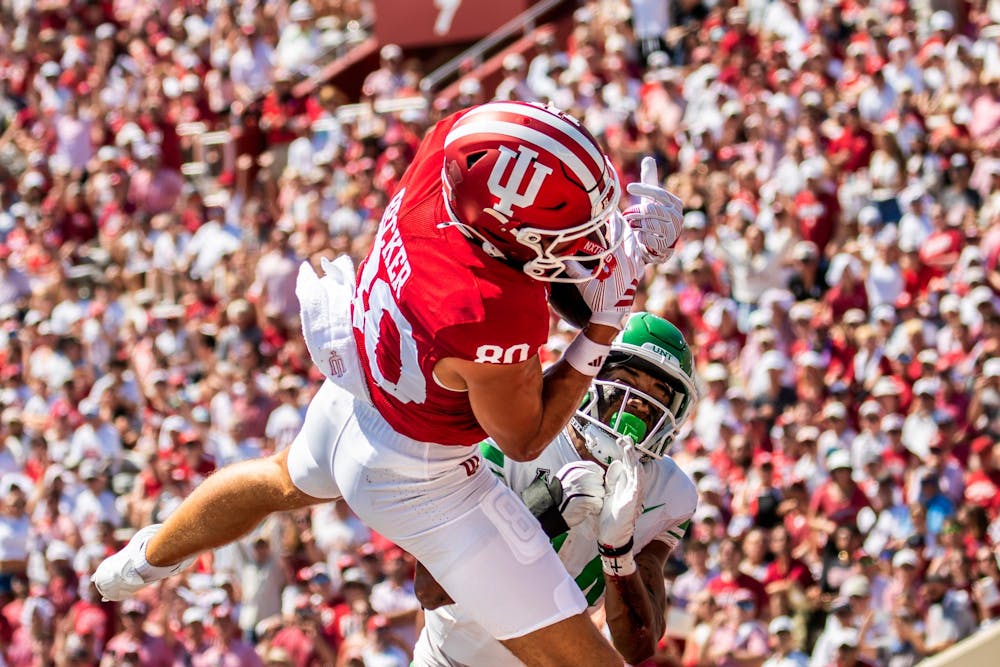
No. 6 Indiana Opens Its Title Defense With a 52-16 Rout of North Texas
The reigning national champions needed just 1:24 to take the lead, when redshirt senior Lee Beebe Jr. returned the opening kickoff 67 yards to set up the first touchdown of the season. TCU transfer quarterback Josh Hoover made his Indiana debut a memorable one, going 13-for-16 for 231 yards and four touchdowns with no interceptions, including a bloodied-face score after taking a facemask penalty to the nose.
Indiana scored on eight of nine offensive possessions under third-year head coach Curt Cignetti, who owns a 27-2 record at IU and is 17-1 against Big Ten competition. The Hoosiers, coming off a 16-0 championship season, move to 1-0 and host Howard next Saturday.
A dominant title-defense opener at home is its own marketing moment, and every brand with a presence in or around Bloomington this weekend got to borrow that energy for free. Worth watching how local businesses lean into the celebration versus treating it as just another game day.
Cheez-It's Couch Committee Officially Launched This Weekend, Right on Cue
As previewed here last Tuesday, Cheez-It's new "Couch Committee" campaign, built by BBDO New York, made its national TV debut September 6, the exact weekend college football's marquee programs, Indiana included, opened their seasons. The format ditches the brand's prior stadium- and athlete-driven playbook for a recurring cast bantering from an orange leather, Cheez-It-shaped couch.
The timing bet paid off: the debut landed inside one of the biggest opening weekends in recent memory, giving the new format maximum exposure right out of the gate.
This is the payoff of the format bet flagged last week: instead of chasing another one-off stadium stunt, Cheez-It launched a recurring format timed to the single biggest weekend on the college football calendar. That's media planning working in service of a creative idea, not the other way around.
Swiss Beauty is pairing a mass-reach reality TV play with hyper-local creator activations, a two-speed strategy worth studying.
Swiss Beauty Pairs Its Bigg Boss Bet With Regional Creators for Festive Season
Swiss Beauty co-founder Mohit Goyal told BestMediaInfo the brand is layering two very different strategies for India's festive shopping season. At the top, its first-ever association with reality show Bigg Boss gives the brand mass, pan-India reach that precision digital targeting alone can't deliver. Underneath that, the brand is leaning into regional creators to build actual local relevance, market by market.
Goyal pointed to Kerala specifically: an emerging market for the brand where, rather than running the same national push, Swiss Beauty connected with local creators around the Onam festival instead. "We realised we have been doing precision marketing well, defining a TG on Meta and narrowing it down. But something on the scale of Bigg Boss cannot be narrowed down the same way," he said.
This is a useful reach-versus-relevance split for students to study. Mass media buys like Bigg Boss can't be micro-targeted, so the brand isn't trying to make them do that job. Instead it's using regional creators to handle the precision layer that a national broadcast property structurally can't. Two tools, two jobs, not one tool asked to do everything.
Good Influencer Marketing Practicum case on channel complementarity rather than channel competition. Have students map which of their own brand's marketing channels are built for reach versus which are built for precision, and where the current media plan is asking one channel to do a job it structurally can't do well.
Microsoft just did to Search advertisers what Google started doing to theirs this month: turned AI-driven campaign management on without asking first.
Microsoft's AI Max Is Now On By Default for Every New Search Campaign
Three days after Google began auto-migrating legacy Search campaigns to its own AI Max product, Microsoft made its version of AI Max generally available, and switched it on by default for all new Search campaigns. Both versions bundle the same three components: search term matching, text customization, and final URL expansion, features that used to require manual advertiser opt-in.
Microsoft's own data claims at least an 8% conversion lift, based on 44 advertiser A/B tests run between June and August, with a spend-weighted lift around 13.6% and ten tests statistically significant. It's a more transparent disclosure than most platforms bother with, but it's still a vendor number from a vendor-run test.
Two of the largest search platforms just made the same move in the same week: automated, AI-driven campaign settings as the default state rather than an option advertisers choose into. That's a real shift in how much control marketers retain over their own campaigns, and most of them found out about it via an in-account notice, not a headline.
As the AI-ad-budget-shift story keeps building, one analyst put a specific name on who stands to lose the most.
Pinterest (PINS): The Name Analysts Keep Flagging as Most Exposed to ChatGPT Ads
Roth Capital flagged Pinterest as the platform most exposed to OpenAI's ChatGPT Ads expansion, a notable call given the budget-shift narrative that's been building across this week's editions. Pinterest just posted an 11th consecutive quarter of double-digit user growth (640 million MAUs, up 11%) and 18% revenue growth, but its ad business sits squarely in the visual-discovery, intent-driven category that ChatGPT Ads is explicitly targeting.
Worth watching whether this is analyst noise or an early signal. Pinterest's whole pitch to advertisers is intent-driven discovery, which is precisely the lane OpenAI is building ChatGPT Ads into. If that thesis holds, Pinterest becomes the clearest bellwether for how much budget actually moves.
⚠️ Not investment advice. Verify independently before any decision.
Refreshed weekly, out with the stale, in with what's actually on Kelly's radar right now.
Ted Lasso, Season 4
Weekly episodes on Apple TV, running through October 7. Still earning the return.
Apple TV"The Art of the Brand" Podcast
Camille Moore and Phillip Millar's brand-strategy conversations remain a standing listen.
PodcastBrands & AI on CNBC
Standing watch item for how Wall Street covers the intersection of brand marketing and AI platforms, especially as ad-budget-shift stories keep heating up.
CNBCCoach Cignetti & the Hoosiers
IU is 1-0 after a 52-16 season-opening rout. Next up: Howard, at home, this Saturday.
Multiple Outlets