Dolly Parton didn't just have a career. She built a brand disciplined enough to license carefully and generous enough to be believed. Today, the industry is taking stock of what that discipline built.
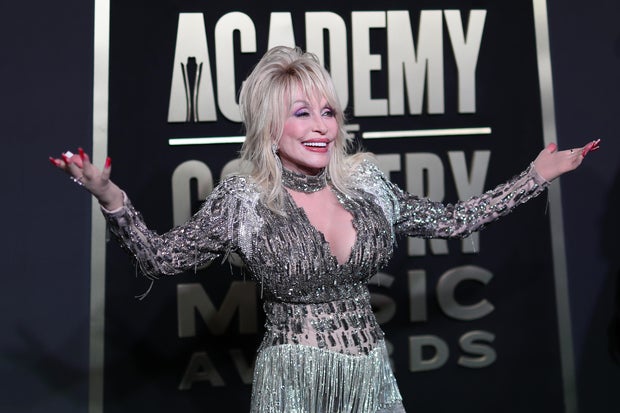
Dolly Parton, an Iconic American Brand Builder, Died Tuesday at 80.
Dolly Parton died Tuesday after a brief battle with cancer, her family announced. She was 80. Over six decades she released nearly 50 studio albums, sold more than 100 million records, and won 10 Grammys with 55 nominations. But her business story ran just as deep as her music: an estimated $450 million fortune built primarily through her 50% ownership of the Dollywood Company, a music publishing catalog she owned outright from early in her career, and a licensing portfolio she guarded with unusual discipline for a star of her fame.
"If I'm going to be big business, I want to be pretty much in control," Parton said in 1982, and that instinct shaped everything that followed. Dollywood opened in 1986 through a partnership with Herschend, built in the Great Smoky Mountains near the poverty she grew up in. The Imagination Library, launched in 1995 in honor of her father who couldn't read, has distributed more than 332 million free books to children across five countries and will continue operating in her absence, a Dollywood Company spokesperson confirmed.
Later extensions, Duncan Hines baking mixes, Dolly Beauty, Parton Family Cellars wines, a denim line with Khloe Kardashian's Good American, home goods with Dollar General, all carried a recognizable piece of the original story rather than reading as a famous name pasted onto a product. That narrative discipline is a large part of why the brand endures past the person.
Every extension Dolly Parton put her name on, the theme park, the wine, the baking mix, the makeup, stayed tethered to the same origin story: Tennessee, family, a father who couldn't read. That's the actual masterclass here. Most celebrity brand extensions fail because they chase categories with no connection to the person's story. Hers succeeded because she said no to more than she said yes to, and everything she did say yes to could trace a straight line back to who she actually was.
This is the definitive Brand Management Practicum case on personal brand architecture. Have students map every Dolly Parton brand extension, Dollywood, Imagination Library, Duncan Hines, Dolly Beauty, Parton Family Cellars, against her core origin story, then identify which extensions would have failed if she hadn't insisted on creative control. Compare against a celebrity brand that over-extended and lost credibility.
Target's Costume Apology Is Now Two Days Old. The Real Test Starts After the News Cycle Fades.
Two days after Target pulled its Halloween costume and issued a public apology over imagery critics said evoked minstrel caricatures, the harder work begins. As Adweek's roundup of four recent brand apologies underscored yesterday, a fast public statement is table stakes, not proof of change. The real signal marketers should watch for is whether Target shares specifics about how the review process failed and what's actually changing in merchandising approval.
The apology bought Target 48 hours of goodwill. What they do with the next 48 is what actually determines whether this becomes a footnote or a pattern. Watch for specifics, not sentiment.
Sports fandom is going fully mobile, and the airplane is the newest battleground for real-time content.
United Is Streaming Live Fantasy Football at 35,000 Feet. ESPN and Starlink Are Making the In-Flight Boring Part Disappear.
United Airlines is teaming up with ESPN to stream live fantasy football coverage during flights, powered by Starlink Wi-Fi. The partnership targets the exact audience most anxious about losing connectivity mid-flight during football season, fantasy managers checking lineups, scores and waiver claims in real time.
The move signals a broader shift in how brands think about "dead time" moments. In-flight Wi-Fi used to be a convenience feature. Pairing it directly with a content partner turns it into an owned media moment during a period when travelers are otherwise a captive, distraction-free audience.
Every "dead zone" in a consumer's day, the flight, the commute, the waiting room, is quietly becoming a media inventory opportunity. United and ESPN found one nobody else had claimed yet. The brands winning next year are the ones mapping out which dead zones are still up for grabs.
ChatGPT Ads Manager's European rollout remains the platform story of the month.
ChatGPT Ads Manager: European Expansion Still the Story to Track
OpenAI's expansion of ChatGPT Ads to 31 European markets remains the most consequential platform update this month, with self-serve Ads Manager access expected later this summer. Combined with the multi-product carousel format and default Automatic Advanced Matching, the platform continues shipping features at a pace that outstrips most marketers' testing timelines.
Same note as the past few days: if this isn't on your Q4 planning radar, it needs to be. The window between "emerging platform" and "table stakes" is closing fast.
Arista Networks sits quietly behind the AI infrastructure boom that's making moments like United's in-flight streaming partnership possible.
Arista Networks (ANET): The Infrastructure Layer Behind Every Streaming Moment
Arista Networks builds the high-performance networking infrastructure that underpins cloud data centers and, increasingly, the real-time streaming experiences brands are racing to launch, from in-flight sports content to AI-powered ad platforms. As more marketing moments move to live, low-latency delivery, the infrastructure layer becomes just as important as the creative.
Every new "streaming at the edge" campaign, like United and ESPN's in-flight fantasy football push, ultimately depends on network infrastructure that can handle real-time data without lag.
Nobody's pitching Arista in a creative brief, but every real-time campaign marketers are excited about this year runs on infrastructure exactly like it. Worth knowing the plumbing behind the flashy stuff.
⚠️ Not investment advice. Verify independently before any decision.
The standing lineup, no changes today.
NBA Finals Recap
The Knicks won the championship. Still the standing sports pick until something replaces it.
ABC/ESPNClaude for Small Business
Anthropic's push into small business tooling. Worth tracking as a comp for our own AI-in-the-loop positioning.
AnthropicAnthropic IPO S-1
$965B valuation, $47B run rate. Watching how the media frames the filing as it moves through the process.
S-1 FilingSilicon Valley Girl
Still the sharpest lens on tech culture from the inside. Recommended for anyone building a personal brand in AI.
YouTube"The Art of the Brand" Podcast
Camille Moore and Phillip Millar keep delivering the best brand-strategy conversations in podcast form right now.
PodcastTed Lasso, Season 4
Premiered August 5. Ten episodes, weekly, through October 7. Early word is it earns the return.
Apple TV